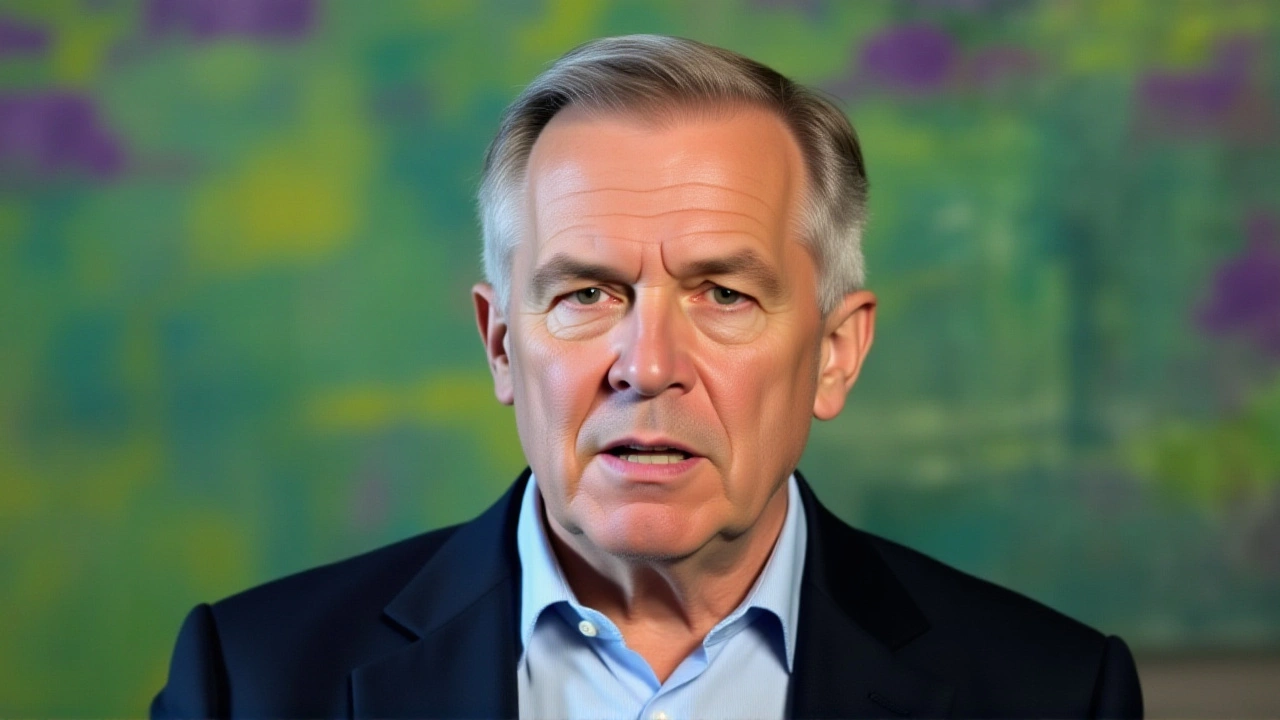
When Mark Carney stood before a crowd in Calgary on November 28, 2025, he didn’t mince words: US tariffs under Donald Trump were about to erase $50 billion from Canada’s economy — $1,300 for every man, woman, and child. The number wasn’t a guess. It was a projection, drawn from trade data, shipping logs, and factory shutdown notices piling up in Ontario and Quebec. And it wasn’t just about money. It was about jobs. About identity. About a nation that trades 90% of its oil south of the border, and now fears it’s being held hostage by a neighbor who once called Canada "a friend."
The Tariff Shockwave
Since January 2025, U.S. tariffs on Canadian exports have gone from bad to brutal. Auto and aluminum tariffs doubled to 14%. Lumber? Tripled to 27%. And now, Trump’s latest move — a 35% tariff on any Canadian export not covered under the Canada-United States-Mexico Agreement (CUSMA) — has sent shockwaves through industries that thought they were safe. The justification? Fentanyl. But here’s the twist: Canada accounts for just 1% of U.S. fentanyl imports. The rest flows from Mexico and China. "It’s not about drugs," said one Ottawa trade analyst, speaking off-record. "It’s about leverage. And Trump knows Canada can’t afford to lose its biggest market."A New Economic Strategy — And a Broken Promise
Carney, who took office after Justin Trudeau resigned on September 3, 2025, over what he called "the dismantling of Canada’s climate legacy," has pivoted hard. On October 15, 2025, he signed a deal with Danielle Smith, Alberta’s premier, to scrap emissions caps on oil and gas — in exchange for Alberta’s promise to expand the Trans Mountain Pipeline Expansion Project and invest in the Alberta Carbon Trunk Line carbon capture system. It was a political gamble: sacrifice environmental credibility to protect economic survival.At the same time, Ottawa committed $12.3 billion CAD to border security — 5,000 new officers, drone surveillance along 1,200 kilometers of frontier, and intelligence ops targeting 17 transnational gangs. The message? We’re serious about security. But the optics? A nation arming itself against a neighbor it’s supposed to trust.

Domestic Countermeasures
While the U.S. raised tariffs, Canada responded with its own. A new 12.5% tariff on select steel imports. A reduction in allowable foreign steel from 35% to 22% of domestic use. And an 18% cut in rail shipping costs for lumber and steel — a direct lifeline to struggling mills in British Columbia and Thunder Bay. "We’re not waiting for Washington to wake up," said Finance Minister Chrystia Freeland in an October 18 address in Ottawa. "We’re building our own economy — with Canadian workers, Canadian resources, Canadian ambition."That ambition includes a $512 billion CAD national infrastructure push — a pact between federal, provincial, territorial, and Indigenous governments to remove internal trade barriers. Think: standardized regulations for cross-province trucking, harmonized product standards, and shared digital infrastructure. It’s the kind of project that could, if executed, turn Canada into a self-sustaining economic bloc. But it’s also a long game. And right now, Canada doesn’t have time to wait.
The Human Cost
The numbers don’t lie. According to Statistics Canada, manufacturing employment in border regions has dropped 8.7% since January — 142,000 jobs gone. In Windsor, Ontario, where auto plants once hummed day and night, shuttered factories now sit behind chain-link fences. In Sault Ste. Marie, lumber workers who spent decades loading railcars now queue at food banks. One worker, 52-year-old Mike Delaney, told a local reporter: "I didn’t vote for Trump. But I’m the one paying for his tweets."Carney’s early comment — "Who cares?" — about communicating with Trump, made during a parliamentary session on October 22, 2025, became a viral meme. He later apologized: "That was a poor choice of words about a serious issue." But the damage was done. For many Canadians, it wasn’t just a gaffe. It was a symbol of detachment.

What’s Next? The Clock Is Ticking
Carney still insists Canada will hit net-zero by 2050 — even as he rolls back climate rules. That contradiction is the defining tension of his tenure. He’s betting that economic survival today will buy the political capital to rebuild green infrastructure tomorrow. But the U.S. election looms. If Trump wins again in 2028? The tariffs won’t just stay — they’ll escalate. If a Democrat takes the White House? There’s no guarantee they’ll reverse them. The world doesn’t rewind.Meanwhile, Canada’s trade diversification plan — pushing harder into the EU, India, and Southeast Asia — is still in its infancy. Exports to those markets grew just 2.1% last quarter. Not nearly enough to offset the $50 billion hole. The real question isn’t whether Canada can survive. It’s whether it can still be the country it wants to be.
Frequently Asked Questions
How are Canadian workers being affected by the U.S. tariffs?
Statistics Canada reports 142,000 manufacturing jobs lost since January 2025, mostly in Ontario, Quebec, and British Columbia. Auto plants in Windsor, steel mills in Hamilton, and lumber operations in BC have seen layoffs, reduced shifts, or outright closures. Many workers are now relying on provincial income support, as retraining programs remain underfunded and slow to scale.
Why did Carney roll back climate rules to help the oil industry?
With 90% of Canada’s oil exported to the U.S., the federal government feared a collapse in energy revenues if tariffs crippled sales. The deal with Alberta traded emissions caps for carbon pricing and carbon capture investment — a compromise meant to keep oil flowing while still meeting net-zero goals long-term. Critics call it greenwashing; supporters say it’s economic triage.
What’s the real reason behind Trump’s 35% tariff on Canadian exports?
The U.S. claims the tariff targets fentanyl trafficking, but Canada contributes only 1% of U.S. fentanyl imports. Experts believe it’s a strategic move to pressure Canada into concessions on energy, water rights, and border security — leveraging economic dependence as political leverage. The timing, right after Carney’s climate policy shift, suggests it’s less about drugs and more about control.
Can Canada replace the U.S. as its main trading partner?
Not quickly. The U.S. takes 75% of all Canadian exports. Even with new deals in the EU and Asia, those markets absorbed just 2.1% more Canadian goods last quarter. Building new supply chains, regulatory alignment, and shipping infrastructure will take a decade — if Canada can afford to wait. Right now, it’s betting everything on domestic growth and internal trade reform.
What’s the significance of the $512 billion domestic investment plan?
It’s Canada’s attempt to become less reliant on the U.S. by boosting internal trade — removing provincial barriers to goods, labor, and infrastructure. If successful, it could unlock $512 billion in new investment, create 1.2 million jobs, and reduce regional inequality. But it requires unprecedented cooperation between 13 governments — and political will that’s still in question.
Is Canada still committed to net-zero emissions by 2050?
Yes — officially. But the path has changed. Carney abandoned the Trudeau-era emissions cap on oil and gas, instead focusing on carbon capture tech like the Alberta Carbon Trunk Line and federal subsidies for green hydrogen. The goal remains, but the strategy now prioritizes industry survival over immediate reductions — a shift that’s divided environmental groups and scientists alike.